

How Do 3D Interactive Websites Keep Visitors Engaged Longer?
3D interactive websites hold visitors longer because depth, motion, and tactile feedback overload novelty centers — driving 30-second-plus dwell times that convert.
Engagement is the engine of conversion. A visitor who spends 30 seconds on your site has more chance of becoming a customer than one who leaves in 5 seconds. Yet most websites are built to be looked at, not interacted with. Static pages are passive. Interactive 3D websites invite participation, and participation extends time on site, reduces bounce rates, and builds familiarity with your brand.
What Makes a Website Truly Interactive?
Answer Capsule: True interactivity requires three layers: responsiveness (the site reacts to input), immediacy (reaction in milliseconds), and meaningfulness (reaction is relevant to the user’s intent).
A static page loads and sits there. The visitor reads, clicks a link, leaves. An interactive website listens. It responds to cursor movement, click events, scroll position, and sometimes keyboard input. When you drag to rotate a 3D product, the site calculates and renders that rotation instantly. When you hover over a section, elements respond. This feedback loop—action and immediate response—is what triggers the brain’s reward system and keeps attention locked.
True interactivity requires three layers: responsiveness (the site reacts to input), immediacy (the reaction happens in milliseconds, not seconds), and meaningfulness (the reaction is relevant to the user’s intent). A decorative animation that spins endlessly doesn’t create engagement. A 3D model you can examine from every angle does, because you control it and learn from it.
The distinction matters for design philosophy. Every interactive element should serve a function: revealing information, facilitating decision-making, or creating delight that reinforces brand perception.
How Much Longer Do Visitors Stay on 3D Interactive Websites?
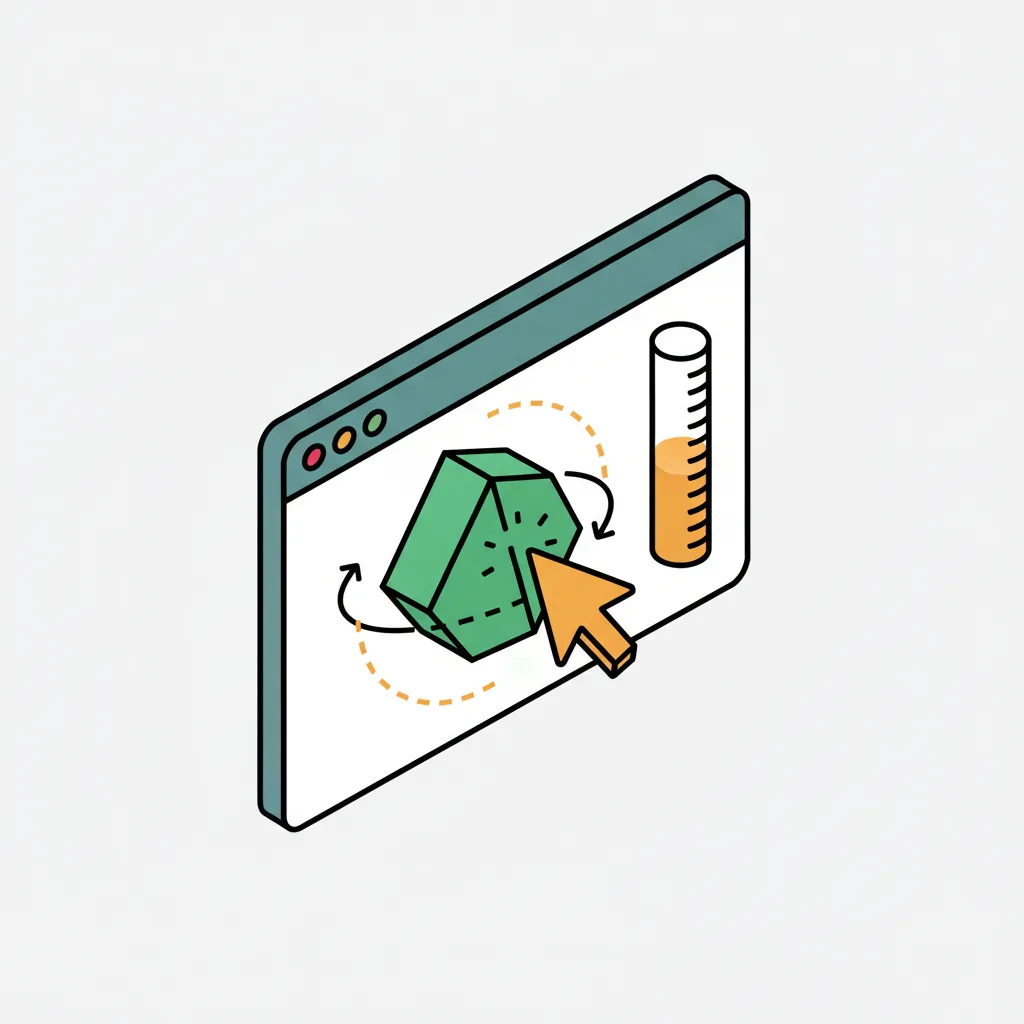
Answer Capsule: Interactive features boost user retention by 60%. In real estate, buyers spend 52% more time viewing properties with 3D tours. 34% of users interact with 3D content for 30+ seconds.
Interactive features boost user retention by 60%, meaning visitors who engage with interactive elements stay measurably longer than those who don’t. In real estate, the data is particularly clear: buyers spend 52% more time viewing properties with 3D tours, and 87% more people view properties that have virtual tours.
For product-focused websites, the time spent interacting with 3D models translates directly. 34% of users interact with 3D content for 30 seconds or longer, with an average interaction time of 20 seconds. Twenty seconds is substantial—that’s enough time for a customer to form opinions, compare details, and build confidence in their decision.
The mechanism is straightforward: when visitors feel they’re discovering rather than being shown, they stay longer. Interactive 3D inverts the power dynamic. Instead of the brand controlling what you see, you control the view. That sense of agency is intrinsically engaging.
What Psychological Principles Drive Engagement With 3D Content?
Answer Capsule: Five principles stack to create engagement: agency (control creates investment), progressive disclosure (always something new), embodied cognition (physical neural activation), temporal dynamics (motion captures attention), and novelty.
Agency is first. Humans are driven to exert control over their environment. When a website lets you manipulate a 3D object, you feel more in control and more invested. This isn’t just preference—it’s how the human brain is wired. Control creates ownership of the experience.
Progressive disclosure is second. Instead of showing all information at once, 3D interactions reveal information progressively. Rotate a product and discover a new angle. Scroll and reveal layers. This pacing keeps the brain engaged because there’s always something new to discover.
Embodied cognition is third. The brain processes interaction as if you’re physically manipulating the object, not watching a screen. When you “rotate” a 3D model with your mouse, the motor cortex is subtly activated. This creates a deeper neural engagement than passive viewing.
Temporal dynamics matter too. Motion captures attention automatically. The human brain is wired to notice movement—it’s an ancient survival mechanism. When a 3D asset moves or responds to your input, attention shifts to it immediately.
Novelty and surprise complete the picture. Most websites don’t have interactive 3D. When a visitor encounters it, the novelty itself is engaging. This advantage diminishes over time as the web evolves, but currently it’s a significant differentiator.
These principles stack. A well-designed 3D interactive website layers all of them: you control the view, discover information progressively, feel the interaction physically, experience responsive motion, and encounter something you didn’t expect. That combination is hard to resist.
Which 3D Interactive Features Produce the Best Results?
Answer Capsule: 3D product viewers drive 94% conversion increase, configurators boost buying confidence by 66%, and 3D tours receive 40% more clicks with 75% of buyers seeing them as key decision tools.
3D product viewers are conversion engines. 3D content on product pages produces a 94% increase in conversion rates, and 82% of viewers actually interact with 3D assets when presented on pages. This works because customers can examine products in detail, which reduces purchase uncertainty. 3D content also reduces returns by 40%—a huge secondary benefit.
Interactive configurators let visitors customize products before purchase. Someone shopping for furniture can see their exact color selection applied in real time. This transparency builds confidence. 66% of shoppers say 3D configurators increase buying confidence.
Parallax and scroll-triggered animations keep the page feeling alive as visitors scroll. These are less about deep interaction and more about maintaining engagement momentum. They work particularly well for long-form content.
3D tours and spatial navigation (commonly used in real estate and hospitality) let visitors walk through a space. Properties with 3D tours receive 40% more clicks and buyers spend 52% more time viewing them. 75% of prospective buyers see virtual tours as key decision tools.
Cursor-responsive animations create a sense of immediacy. Elements follow the mouse or shift based on cursor position. This subtle feedback says “the site is paying attention to you,” which feels personalized and keeps attention.
The best choice depends on your business model. E-commerce benefits most from product viewers and configurators. Real estate thrives with 3D tours. Service businesses use scroll animations and interactive process visualizations.
How Do You Build a 3D Interactive Website Without Hurting Load Times?
Answer Capsule: Optimize geometry, lazy-load assets, use efficient formats (glTF for 3D, WebP for images), implement level-of-detail rendering, cache aggressively, and test on real devices.
Optimize geometry first. Complex 3D models with millions of polygons render slowly. Efficient models use fewer polygons but look equally good. This is a technical discipline—some developers are better at this than others.
Lazy-load assets. Don’t load all 3D models at once. Load them as the visitor scrolls near them. This spreads the performance cost across the user session.
Use efficient formats. WebP for images, glTF for 3D models, and compressed video files load faster than older formats. Format matters as much as content.
Compress and minify code. Every JavaScript library adds weight. Choose libraries carefully. Remove unused code. Minification reduces file sizes automatically.
Implement level-of-detail rendering. Show lower-detail versions of models when the camera is far away, then increase detail as you zoom in. This reduces computational load.
Cache aggressively. Once a visitor loads a 3D asset, store it locally so it doesn’t need to reload on subsequent pages.
Test on real devices. Mobile devices render 3D differently than desktops. Optimizing for the lowest common denominator ensures broad compatibility.
Cause & Effect Strategic Partners’s 3D interactive design services prioritize performance as much as visual impact. The goal is engagement without sacrifice.
Most importantly, measure. Use tools like Lighthouse and WebPageTest to monitor load times. When engagement metrics improve, weigh the performance cost against the conversion gain. Often the return justifies the investment.
FAQs
How much does a 3D interactive website cost for a small business?
A basic 3D interactive enhancement costs $5,000–$25,000 over 4–8 weeks. Mid-level implementations with multiple interactive features run $25,000–$75,000 over 2–4 months. Start with your highest-impact page and expand based on results.
What’s the difference between interactive and immersive web design?
Interactive design responds to user input—clicks, hovers, scrolls. Immersive design goes further by creating presence—the feeling of being in a space rather than operating an interface. Both improve engagement, but immersive design typically requires more investment and technical sophistication.
Do 3D interactive elements work on all browsers?
WebGL (the technology behind most 3D web experiences) is supported by Chrome, Firefox, Safari, Edge, and Opera—covering 95%+ of web traffic. Well-built implementations degrade gracefully on unsupported devices, showing static fallbacks instead.
How do I measure if 3D interactivity is working on my website?
Track time-on-site, bounce rate, conversion rate, and feature-specific interaction rates before and after implementation. Segment visitors who interact with 3D elements versus those who don’t. Heat mapping tools reveal engagement patterns.
Can 3D interactive features help reduce product returns?
Yes. 3D content reduces product returns by 40%. When customers can examine products from every angle and configure options before purchase, the gap between expectation and reality shrinks significantly, leading to fewer returns and higher satisfaction.