
How Can 3D Product Visualization Boost E-Commerce Sales?
E-commerce lives on reducing friction between desire and purchase. A customer sees a product, understands it, trusts the quality, completes the transaction. Tra
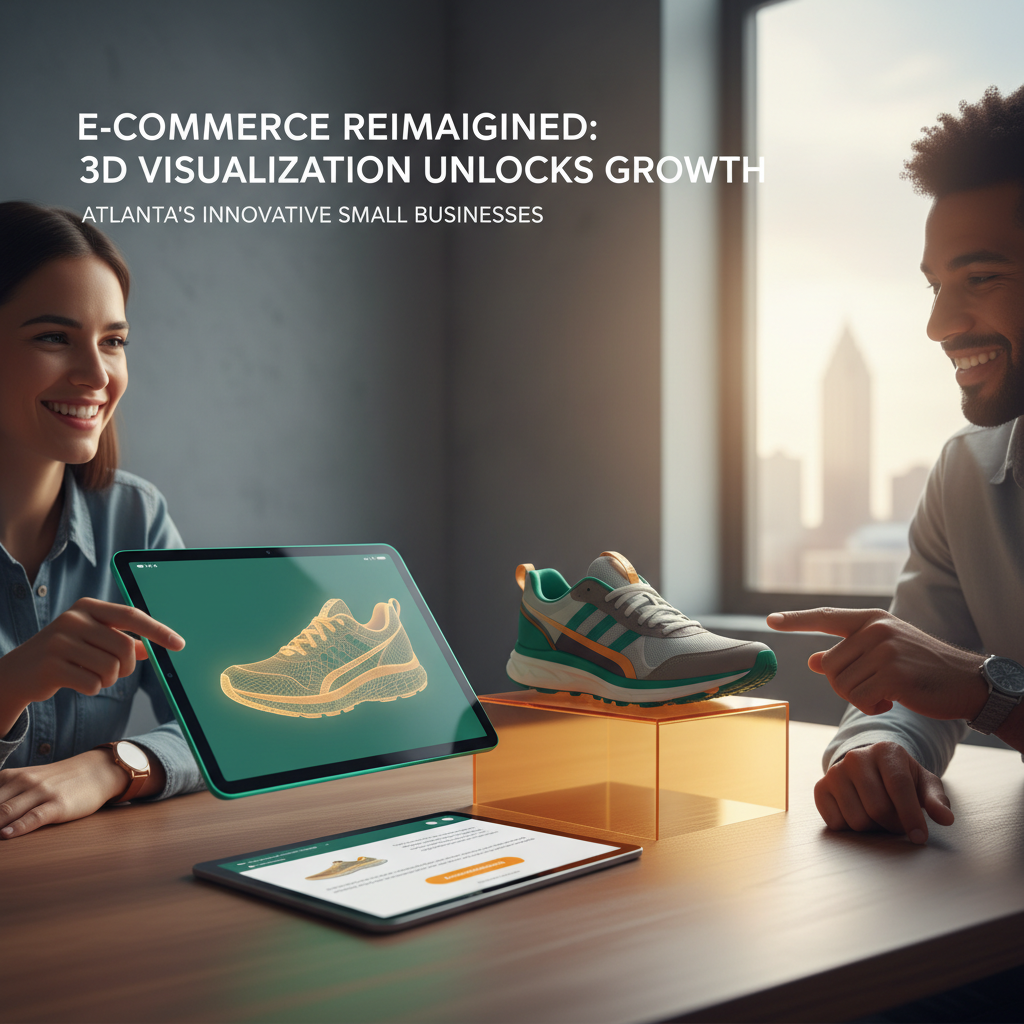
E-commerce lives on reducing friction between desire and purchase. A customer sees a product, understands it, trusts the quality, completes the transaction. Traditional product photography handles the first two steps reasonably well. But understanding and trust—especially for high-value items—require more than static images. 3D product visualization changes this equation. It lets customers examine products as if they’re holding them, examining them from every angle, understanding construction and detail.
What Is 3D Product Visualization?
Answer Capsule: 3D product visualization is an interactive digital representation of a physical product that customers can rotate, zoom, and configure in their browser—no plugins required.
A 3D product viewer is a 3D model of your product rendered in the browser. Customers can rotate, zoom, and sometimes interact with the model—adjusting colors, materials, or configurations. Unlike a product photo, which shows one angle and one moment in time, a 3D viewer shows all angles simultaneously. The customer controls the view.
There are several flavors of product visualization. A basic 3D viewer might simply let you rotate a shoe to examine it from all sides. A 3D configurator lets you change colors, materials, or sizes and see the result instantly. An AR try-on feature (using augmented reality) lets you see how glasses or makeup look on your face or how furniture fits in your room. All of these fall under the product visualization umbrella.
The technology is straightforward. A 3D model is created in software like Blender or Cinema 4D. The model is optimized for web performance and embedded in the product page using WebGL, Three.js, or Babylon.js. The viewer provides interactive controls—click and drag to rotate, scroll to zoom, buttons to change configurations. The entire experience runs in the browser; no plugins or downloads required.
How Much Do 3D Product Viewers Increase Conversion Rates?

Answer Capsule: 3D content produces a 94% increase in conversion rates, 82% of viewers interact with 3D assets, and 3D content reduces returns by 40%—improving both revenue and profitability.
3D content on product pages produces a 94% increase in conversion rates. To put this in perspective: if your current conversion rate is 2%, adding 3D might lift it to nearly 4%. For an online store generating $1 million in annual revenue, a doubling of conversion means $2 million in revenue from the same traffic.
82% of viewers actually interact with 3D assets when presented on pages, meaning the feature isn’t just a nice-to-have—customers actively use it. 34% of users interact with 3D content for 30 seconds or longer, with an average interaction time of 20 seconds.
The psychological mechanism is straightforward: deeper understanding creates confidence, and confidence drives purchase decisions. When a customer can examine a product exhaustively, they form more complete mental models. Shadows, stitching, material texture, construction—these details matter for high-involvement purchases.
The return benefit is equally important. 3D content reduces returns by 40%. Returns are expensive. They cut into profit margins, strain customer service, and create logistics headaches. When 3D visualization reduces returns by 40%, it’s not just increasing conversion—it’s improving profitability.
What Types of Products Benefit Most From 3D Visualization?
Answer Capsule: Furniture, footwear, fashion, jewelry, electronics, appliances, and configurable products benefit most. If visual differentiation influences purchase decisions, 3D improves conversion.
High-benefit categories are the obvious starting points. Furniture, footwear, fashion, jewelry, and cosmetics are ideal. A customer buying a $300 sofa wants to understand dimensions, see how legs look, examine upholstery texture. 3D enables that. Eyeglasses, watches, and rings are small but high-value. 3D shows detail that photos struggle to convey.
Phones, laptops, and tech products benefit significantly. Customers want to see how devices look from different angles, examine build quality, understand proportions.
Appliances and tools are underutilized cases for 3D. A kitchen mixer is functionally complex. 3D can show how parts move together, where controls are positioned, how the device transforms throughout use.
Custom or configurable products are prime candidates for 3D configurators. A customer designing a custom desk wants to see the exact configuration. A shoe brand offering 20 color combinations wants customers to see their specific choice.
Food and beverage are emerging use cases. Luxury chocolates, premium coffee packaging, craft beverages—visual differentiation matters. 3D shows packaging detail and environmental context.
Less ideal categories include commodities where price dominates (paperclips, generic bolts), bulk items where individual unit appearance is irrelevant, and subscription services where the product is digital or service-based.
The pattern is clear: if visual differentiation influences purchase decisions, 3D visualization improves conversion. If your product competes on price alone, 3D’s ROI is questionable.
How Do 3D Configurators Reduce Product Returns?
Answer Capsule: Configurators address the #1 source of returns: mismatch between expectation and reality. When customers see exact configurations before purchase, surprise drops and satisfaction rises.
A customer orders a sofa in navy blue without seeing it in their space. It arrives, looks different under their lighting, clashes with their décor. Return. A 3D configurator lets that customer visualize the sofa in their home using augmented reality before purchase. This expectation-setting reduces mismatch returns.
A furniture buyer orders a desk with a walnut top and black legs, never having seen that combination. The finish looks different than expected. Return. A 3D configurator shows that exact combination, eliminating surprise.
A fashion customer orders a jacket in burgundy without seeing it under store lighting. It’s darker or lighter than expected. Return. A 3D configurator with different lighting scenarios or augmented reality try-on prevents this.
3D content reduces returns by 40%, and configurators are a significant reason why. When customers make informed decisions based on complete visual information, mismatches decline. Returns drop, profit margins improve, logistics costs decrease, and customer satisfaction increases—all cascading from better visualization.
The secondary benefit is reduced customer service load. Fewer returns means fewer emails, fewer customer complaints, fewer packages to process. This operational efficiency compounds.
What Does It Cost to Add 3D Product Visualization to an Online Store?
Answer Capsule: Basic viewer: $5,000–$15,000. Multiple products: $15,000–$40,000. Custom configurator: $25,000–$75,000. AR implementation: $40,000–$150,000+. Professional 3D models cost $1,000–$5,000 per product.
Basic 3D product viewer (single product, professional 3D model, optimization for web, integration with your platform): $5,000–$15,000. This gets you a functioning 3D viewer on your best-selling product, proving the concept and measuring ROI.
Multiple product viewers (5–10 products, each with professional modeling and optimization): $15,000–$40,000. This scales the approach, covering your core product line.
Custom 3D configurator (customers can change colors, sizes, or configurations; each selection updates the model in real time): $25,000–$75,000. This is more complex because the technical work includes building configuration logic, managing product variants, and ensuring accurate visual representation across combinations.
Augmented reality implementation (customers can see products in their space using phone cameras): $40,000–$150,000+. AR is the most sophisticated approach, requiring environmental detection, model placement logic, and significant testing across device types.
Platform and tool costs: Some platforms like Shopify offer 3D model uploads through apps. These reduce development costs but constrain customization. Expect $500–$5,000 in monthly subscription costs if using third-party platforms.
Modeling costs: A professional 3D product model costs $1,000–$5,000 per product, depending on complexity. A simple shoe might cost $1,500. A complex furniture piece with moving parts might cost $4,000. This is separate from viewer development.
Maintenance: Annual costs for updates, optimization, and platform compatibility typically run 10–20% of initial development cost.
The decision hinges on transaction value and volume. A business selling $100 items with 100 monthly transactions ($10,000 revenue) can’t justify $40,000 in 3D development. A business selling $500 items with 200 monthly transactions ($100,000 revenue) absolutely can—the 94% conversion lift pays for the investment in months.
Cause & Effect Strategic Partners’s 3D interactive design services help e-commerce businesses right-size 3D investments relative to their specific metrics and growth stage.
The calculation is straightforward: if additional revenue from 3D visualization exceeds the cost within 12 months, invest. If it takes 2+ years, consider starting smaller or testing the concept first.
FAQs
Does 3D product visualization work on Shopify?
Yes. Shopify supports 3D model uploads and has apps like Shopify 3D Viewer that integrate 3D visualization into product pages. For more customized implementations, agencies can build custom Three.js viewers that integrate with Shopify’s product API.
How long does it take to create a 3D product model?
A professional 3D product model takes 1–3 weeks depending on complexity. Simple products (shoes, accessories) are faster. Complex products with moving parts, multiple materials, or detailed textures take longer. Web optimization adds another few days.
Will 3D product viewers slow down my e-commerce site?
Not when properly optimized. Lazy-loading ensures 3D models load only when visitors scroll to them. Compressed model formats (glTF) are efficient. The key is optimization—a well-built 3D viewer adds minimal load time while significantly improving conversion rates.
What’s the ROI timeline for 3D product visualization?
For e-commerce businesses with $100,000+ monthly revenue, a $50,000 3D investment typically pays back within 2–3 months through increased conversion and reduced returns. Smaller businesses should start with a basic viewer ($5,000–$15,000) to validate ROI before scaling.
Can 3D visualization replace product photography entirely?
Not yet for most businesses. 3D visualization complements photography rather than replacing it. Product photos are still important for marketing materials, social media, and quick visual reference. 3D adds depth for customers who want to examine products closely before purchasing.