

What Industries Benefit Most from 3D Website Design?
3D isn't a universal solution. In some industries it's transformational. In others it's nice-to-have decoration. The difference comes down to how much 3D addres
3D isn’t a universal solution. In some industries it’s transformational. In others it’s nice-to-have decoration. The difference comes down to how much 3D addresses core customer needs: visualizing complex products, reducing uncertainty in high-stakes purchases, or simply standing out in hyper-competitive markets.
Which Industries Get the Highest ROI from 3D Websites?
Answer Capsule: Real estate, e-commerce, architecture, automotive, and healthcare see measurable revenue and efficiency improvements from 3D websites—typically exceeding 30% lift in conversion or processing metrics.
Real estate benefits dramatically. Properties with 3D virtual tours sell 31% faster and at up to 9% higher prices. 87% more people view properties with virtual tours compared to traditional photos, and 75% of prospective buyers cite virtual tours as key decision tools. These aren’t small improvements—they’re fundamental shifts in how buyers evaluate properties. 63% of homebuyers submit offers on properties they haven’t seen in person, making virtual tours a critical sales tool.
E-commerce sees conversion increases of 94% on product pages with 3D models. 66% of shoppers say 3D configurators increase buying confidence. Additionally, 3D content reduces product returns by 40%, which directly improves profitability. For any e-commerce business with products costing more than $50, 3D visualization typically delivers positive ROI within 6 months.
Architecture and construction firms use 3D to win bids and reduce redesign cycles. Clients visualize proposed designs, give feedback early, and catch issues before construction starts. This reduces change orders and project delays, improving profitability per project.
Automotive companies use 3D to help customers configure vehicles online, visualizing options before purchase. This reduces sales cycles and increases customer satisfaction.
Healthcare uses 3D to explain complex procedures to patients, reducing anxiety and improving informed consent. Dental practices use 3D to show before-and-after simulations of orthodontic work.
How Does 3D Design Transform Real Estate Websites?
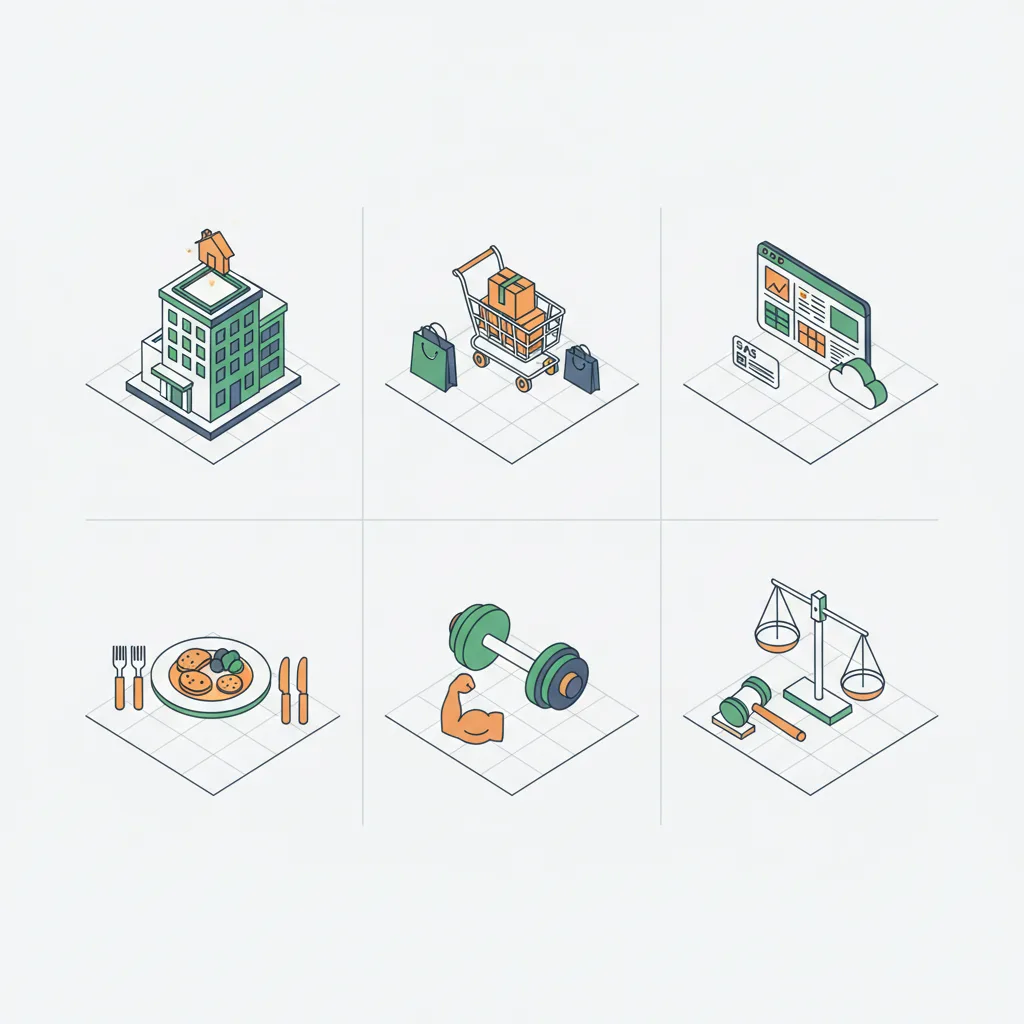
Answer Capsule: 3D virtual tours and floor plans shift real estate from local information source to national marketplace, enabling remote buying decisions and dramatically reducing wasted property viewings.
The core benefit is elimination of uncertainty. A buyer in New York considering a property in Atlanta can take a comprehensive virtual tour, understand layout, visualize space scale, and inspect finishes before deciding to fly down for in-person viewing. This eliminates property viewings that were never serious purchases.
3D tours cut wasted viewing time by 40%, meaning agents show serious buyers and don’t waste time on tire-kickers. For a real estate agent, this multiplier effect—fewer showings, higher quality leads, higher close rate per showing—dramatically increases productivity.
3D tours generate 40% more clicks on listings, with buyers spending 52% more time on those listings. This behavior change feeds into Google’s algorithms, improving SEO ranking for real estate websites. Higher rankings bring more inbound leads, creating a virtuous cycle.
The economic impact: faster property sales, higher final sale price, higher agent productivity, and better lead quality. A real estate business with 50 agents is handling 50% more transactions with the same headcount if 3D virtual tours improve efficiency by 40-50%. That’s dramatic leverage.
For smaller real estate firms competing against larger brokerages with bigger marketing budgets, 3D virtual tours are a competitive equalizer. A small independent agent with professional 3D tours competes on equal footing with larger firms.
Why Is 3D Product Visualization Critical for E-Commerce?
Answer Capsule: 3D product visualization addresses the fundamental limitation of e-commerce: customers can’t physically interact with products before purchase, leading to high return rates and buyer uncertainty.
The mechanism is straightforward. A customer sees a product photo and imagines what it looks like. They buy, it arrives, it doesn’t meet expectations because the photo didn’t show it accurately. They return it.
3D solves this by allowing customers to rotate the product, zoom to inspect details, adjust lighting to see how it looks in different conditions, and sometimes even configure options (color, size, materials). This close inspection mimics in-store product inspection, reducing the mental gap between expectation and reality.
94% of first impressions come from web design, formed in 50 milliseconds. A product with interactive 3D immediately creates a stronger impression than one with static photos. This stronger initial perception translates to higher purchase confidence.
The numerical impact is significant. A typical e-commerce site might convert 2% of visitors to customers. With 3D product visualization, conversion might jump to 3.88% (a 94% increase). For a site with 10,000 monthly visitors, that’s 200 sales becoming 388 sales—188 additional monthly sales. At $100 average order value, that’s $18,800 additional monthly revenue.
For high-value products—furniture, watches, fashion, electronics—3D visualization creates measurable competitive advantage. Customers feel more confident buying from you over competitors if you provide 3D but they don’t.
How Are Architecture and Construction Firms Using 3D Websites?
Answer Capsule: Architecture and construction firms use 3D to visualize complex projects before groundbreaking, reducing design iterations, winning competitive bids, and improving client satisfaction.
The process is straightforward: client provides specifications, architect creates 3D renderings and interactive models, client reviews and requests changes, architect updates models, cycle repeats until approval. This happens before construction contracts are signed.
The value emerges from early feedback. Design issues that would have cost thousands to fix during construction are identified and adjusted during 3D visualization stage, costing far less. A client realizing they want the staircase in a different location costs zero during visualization but thousands to change mid-construction.
From a business development perspective, 3D visualizations are powerful sales tools. When bidding for large projects, architects who can show interactive 3D models of the proposed design often win over competitors showing 2D blueprints. The visualization demonstrates competence and helps clients imagine the end result.
For real estate developers, 3D visualizations and virtual tours of planned buildings help market units before construction completes. Buyers can tour a virtual apartment building and place reservations based on visualizations. This generates presales capital that funds construction—a critical financing mechanism for large development projects.
3D websites featuring previous projects build portfolio impact. Interactive visualization of past work impresses potential clients more than flat images in a PDF. The accessibility—clients can view projects on their phones, rotate models, zoom to details—creates stronger emotional connection.
Can Service-Based Businesses Benefit from 3D Web Design?

Answer Capsule: Yes, but indirectly. Service businesses should use 3D for brand differentiation and explaining complex concepts, not for direct product visualization.
A consulting firm doesn’t need 3D to visualize consulting. But an interactive 3D data visualization showing how their analysis works, or a 3D visualization of their process methodology, differentiates them in crowded markets. Potential clients visiting their website are impressed by the sophistication and investment in presentation.
Healthcare and dental practices use 3D models to explain procedures. A dental practice showing 3D visualizations of orthodontic treatment options, or a surgical center showing 3D anatomical models during patient education, reduces patient anxiety and improves informed consent.
Interior designers use 3D to show clients proposed room designs before purchasing furniture or paint. Clients can visualize the complete design, request adjustments, and commit to purchases confidently. This increases average project value and reduces revision cycles.
Financial services firms use 3D data visualizations to explain investment concepts or portfolio performance. The visualization isn’t strictly necessary for understanding, but it demonstrates sophistication and builds confidence in the firm’s technical capabilities.
The pattern: Service businesses gain ROI from 3D not by visualizing their service (hard to do), but by using 3D to explain complex concepts, build brand perception, or enhance customer education. The ROI is indirect—higher perceived value, increased average contract value, improved close rates—rather than direct (fewer returns, faster sales).
Which Industries Should Skip 3D for Now?
Answer Capsule: Media, publishing, news, and simple service businesses like tutoring or virtual assistance probably don’t justify 3D investment until they reach specific scale or growth stages.
News and publishing sites don’t benefit from 3D. The content is text and images; 3D adds no value. A news site with 3D is spending engineering resources on decoration rather than journalism.
Simple services like freelance writing, virtual assistance, or tutoring are sold based on reputation and expertise, not visualization. 3D is irrelevant to purchase decisions. These businesses benefit more from testimonials, portfolios, and certification than from interactive 3D.
Subscription services and SaaS products generally don’t benefit from 3D unless the product interface itself involves spatial visualization. Most SaaS companies benefit more from video tutorials and clear copywriting than from 3D demonstrations.
Local services—plumbing, landscaping, cleaning—typically don’t justify 3D investment. They’re sold based on trust, referrals, and price. A plumber spending $20,000 on a 3D website won’t see ROI because customers aren’t choosing plumbers based on website interactivity.
The guideline: If your product or service involves physical space, complex visualization, or high uncertainty, 3D likely delivers ROI. If your product is commoditized, sold on price or trust, or doesn’t involve spatial visualization, 3D is probably expense rather than investment.
How to Evaluate Whether 3D Makes Sense for Your Industry
Calculate potential ROI before committing: estimate current conversion rate, project realistic improvement from 3D, multiply by average customer value, and compare to development cost.
Your current conversion rate is the starting point. If you’re getting 1% of visitors to convert (purchase, request quote, submit lead), and 3D could plausibly lift that to 1.5%, calculate the value. With 10,000 monthly visitors and $500 average customer value, you’re generating $50,000 monthly revenue. A 50% improvement is $25,000 additional monthly revenue.
Development cost for a focused 3D enhancement is typically $15,000-$40,000. If 3D generates $25,000 additional monthly revenue, it pays for itself in less than 2 months. If you maintain that revenue increase for a year (conservative estimate), that’s $300,000 revenue from a $25,000 investment—12x ROI.
But that math assumes 3D actually improves your conversion rate by 50%. In competitive e-commerce where everyone has 3D, your 50% estimate might be wrong. In real estate where 3D is rarer, your 50% estimate might be conservative.
The honest calculation: talk to firms in your industry that already use 3D. What conversion improvement did they see? What was their cost? Ask your web developer for honest assessment of whether 3D is a revenue driver or a cost in your specific industry.
Industries with clear ROI from 3D (real estate, e-commerce, architecture) are proven. Industries without clear ROI (news, simple services) are uncertain. If you’re in the uncertain category, either test 3D on a single high-value page before full investment, or skip it for now and revisit in 12 months as technology matures and becomes cheaper.
Not sure if 3D fits your industry?
Cause & Effect Strategic Partners’s 3D interactive design services include industry-specific ROI analysis. We’ll tell you honestly whether 3D makes sense for your business.
Get a Free Industry Assessment →
Frequently Asked Questions About 3D Website Design by Industry
Which industry sees the fastest ROI from 3D?
Real estate typically sees the fastest ROI. Properties with 3D tours sell 31% faster and generate 40% more clicks. A single faster property sale can justify the entire 3D investment for a real estate agent.
Does a restaurant need a 3D website?
Generally no. Restaurants compete on food quality, reviews, and location. A 3D website won’t change dining decisions. However, a high-end restaurant or event venue might benefit from a 3D virtual tour to showcase ambiance and space for event planning.
Can healthcare businesses use 3D for patient education?
Yes. Dental practices, surgical centers, and medical device companies use 3D to explain procedures and products. 3D anatomical models reduce patient anxiety and improve informed consent, leading to higher treatment acceptance rates.
Is 3D worth it for B2B software companies?
It depends on the product. If your software involves spatial data, architecture, or complex systems, 3D visualization can strengthen sales conversations. For simple SaaS tools, video tutorials and clear copywriting deliver better ROI.
How do I know if my competitors are using 3D?
Visit their websites on desktop and mobile. Look for interactive elements you can rotate or manipulate. Check if product pages offer 3D viewers or configurators. If competitors aren’t using 3D yet, you have a differentiation opportunity.