

Is 3D Website Design Worth the Investment for Small Businesses?
The question small business owners ask first isn't 'Can I do this?' It's 'Can I afford this?' Then comes the harder question: 'Will it actually return more prof
The question small business owners ask first isn’t “Can I do this?” It’s “Can I afford this?” Then comes the harder question: “Will it actually return more profit than it costs?”
This is where the conversation gets honest. 3D design is expensive relative to traditional design. But for the right business, the return justifies the cost entirely.
We’ll break down what 3D actually costs, compare it to conventional alternatives, and show you exactly when it makes sense.
What Does 3D Website Design Actually Cost?
Answer Capsule: Basic 3D elements cost $5,000-$15,000, mid-level implementations run $25,000-$75,000, and comprehensive builds reach $75,000-$150,000+. The key cost driver is scope.
Costs break into categories based on complexity.
A basic 3D element on an existing website: $5,000-$15,000. This might be a 3D hero section or an interactive product viewer for a single item. The timeline is 4-8 weeks. This is where small businesses often start because it’s more accessible than a full 3D rebuild.
A mid-level 3D website with multiple interactive sections: $25,000-$75,000. Several interactive features. Product configurators. Maybe a 3D tour or process visualization. Timeline is 2-4 months. This is where many small businesses end up when they commit to 3D seriously.
A comprehensive 3D website with extensive interactive experiences: $75,000-$150,000+. Photorealistic rendering. Complex configurators. Multi-page interactivity. Timeline extends to 4+ months. This is enterprise territory, though some larger small businesses operate here.
These costs include design, development, 3D asset creation, optimization, and initial deployment. They don’t include ongoing hosting or maintenance, which are typically the same as non-3D sites.
Why do these price points exist? Developers specializing in 3D charge $30-$150 per hour. A basic 3D feature might consume 150-300 developer hours. A complex implementation might consume 800+ hours. The math is straightforward if unglamorous.
Asset creation adds cost. Professional 3D models cost money. Texture work costs money. Optimization for web takes time. Each layer adds expense.
How Does 3D Design Compare to Traditional Web Design in ROI?
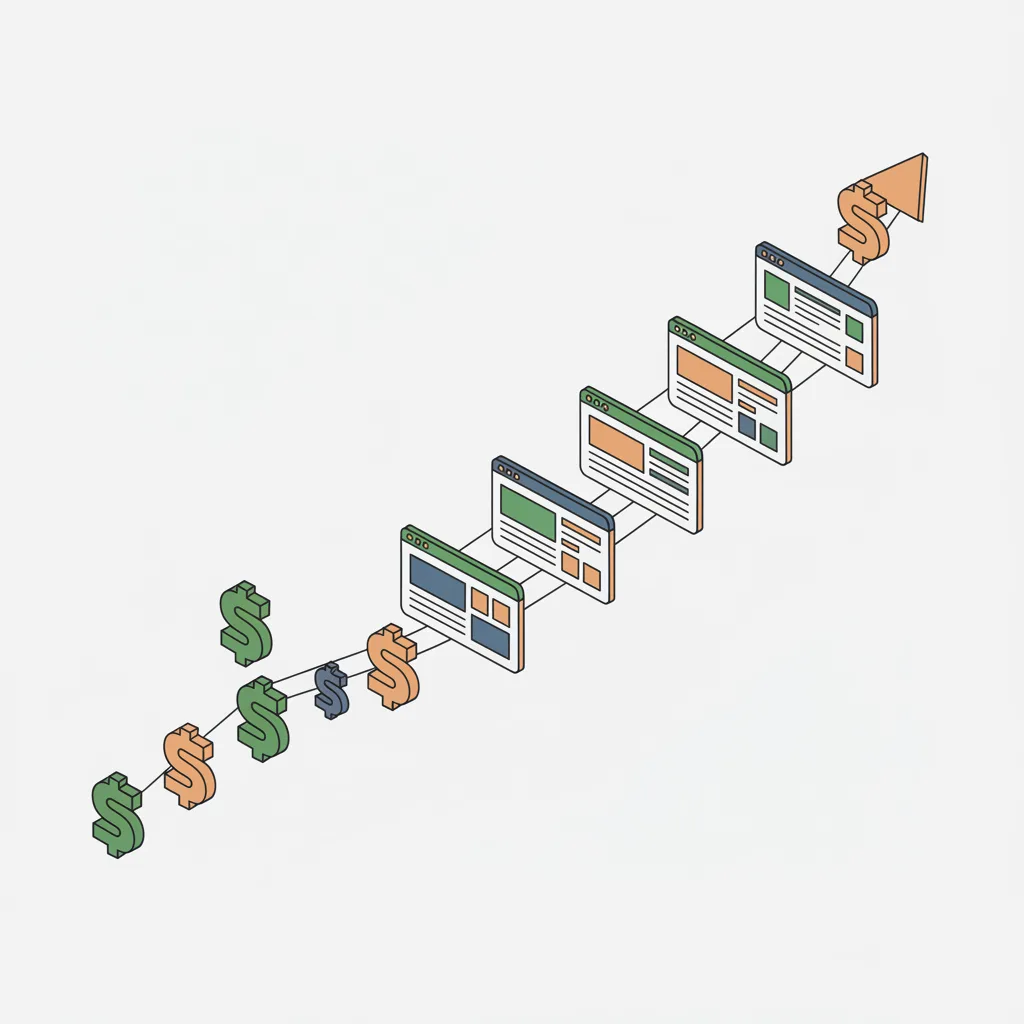
Answer Capsule: Traditional design costs $2,000-$15,000 with lower risk. 3D design shows 94% conversion increase on product pages. A $50,000 investment can pay back in under 3 months for e-commerce.
Traditional web design costs $2,000-$15,000 for a small business site. It’s cheaper upfront. But does it move the needle on your actual business goal?
That depends on your business model.
For an e-commerce business selling physical products, the comparison is direct. A traditional website with product photos converts at a baseline rate. A 3D website with interactive product visualization converts at a higher rate. Product pages with 3D show 94% conversion increase. 3D also reduces returns by 40%.
The ROI math: if you sell $100,000 per month and a 3D implementation increases revenue 20% (conservative), that’s $20,000 additional monthly revenue. A $50,000 investment pays back in less than three months. Then it’s pure profit.
For a service business (consulting, coaching, plumbing, etc.), the comparison is murkier. 3D doesn’t always move the conversion needle as directly. A plumber doesn’t need 3D. A coach might not. But a custom builder? A luxury service? Interior designer? The psychology of 3D can shift perception meaningfully.
For B2B software, 3D can demonstrate complexity in ways traditional design can’t. A data visualization in 3D where visitors explore architecture proves sophistication. ROI exists but is harder to measure. It’s brand-building rather than direct conversion.
The traditional design advantage: lower risk, lower cost, faster time-to-value. You can launch quickly and iterate. The 3D design advantage: higher conversion impact, stronger brand differentiation, better engagement metrics.
The real comparison isn’t 3D versus traditional design. It’s “does my business model benefit more from conversion uplift or cost savings?” Answer that honestly, and the right choice emerges.
Can Small Businesses Compete With Enterprise-Level 3D Websites?
Yes. But not by copying their approach.
Large companies build 3D experiences that are technically perfect and visually stunning. They hire teams. They budget millions. Small businesses can’t compete at that level.
But they don’t need to. Enterprise 3D often becomes indulgent. Beautiful animations that don’t serve a business goal. Impressive for impressive sake. It’s entertainment, not conversion.
Small businesses win by being strategic. You don’t build 3D everywhere. You build it exactly where it solves a customer problem. That precision beats enterprise polish.
A small furniture company with 3D configurators for their three most popular pieces outperforms a large furniture retailer with flashy but non-functional 3D hero sections. The small company’s customers can actually use the 3D. That matters.
A small jewelry brand with photorealistic 3D product viewers outperforms a large brand with expensive but generic 3D. The small brand showed smart resource allocation. The large brand showed budget waste.
The competitive advantage for small businesses comes from execution specificity, not budget. You’re asking “what problem does 3D solve for our customers?” not “what can we build because we have budget?”
Customers notice the difference. They see intention versus indulgence.
What Are the Hidden Costs of 3D Website Design?
Answer Capsule: Hidden costs include maintenance (5-10% annually), model updates for new products, 20-40% higher hosting, premium developer rates, and expanded testing requirements. Budget 10-15% of initial build for these.
Maintenance is underestimated. A 3D website needs ongoing care. Browser updates happen. Devices get faster and slower. Optimization that worked two years ago might underperform today. Budget 5-10% of initial build annually for maintenance.
Model updates require rework. If you add a new product, you need a new 3D model. That’s additional cost. Fast iteration on products becomes slower with 3D. Plan accordingly.
Asset hosting can increase costs. Large 3D model files need decent hosting. Content delivery networks help but cost more. It’s not a huge cost increase but it’s real. Budget 20-40% more for hosting than traditional sites.
Developer expertise commands premium rates. Not every developer builds 3D. The ones who do cost more. If your developer leaves, replacing them is expensive. Build your site in a way that other developers can maintain it, or budget for retention.
Testing complexity grows. Traditional websites test on browsers and devices. 3D adds layers. Device performance varies wildly with 3D. You need testing on actual devices, not just simulators. This requires budget.
Performance optimization takes time. A 3D site that runs beautifully on new computers will crawl on older ones. Optimization to make it acceptable across the performance spectrum requires skill and time. Both cost money.
Browser compatibility gets more nuanced. A traditional site works or it doesn’t. 3D sites degrade gracefully, or they don’t. Testing across browsers and ensuring fallbacks exist takes work.
These hidden costs typically run 10-15% of initial build. Not insignificant, but budgetable if you plan ahead.
When Does 3D Website Design Not Make Sense?
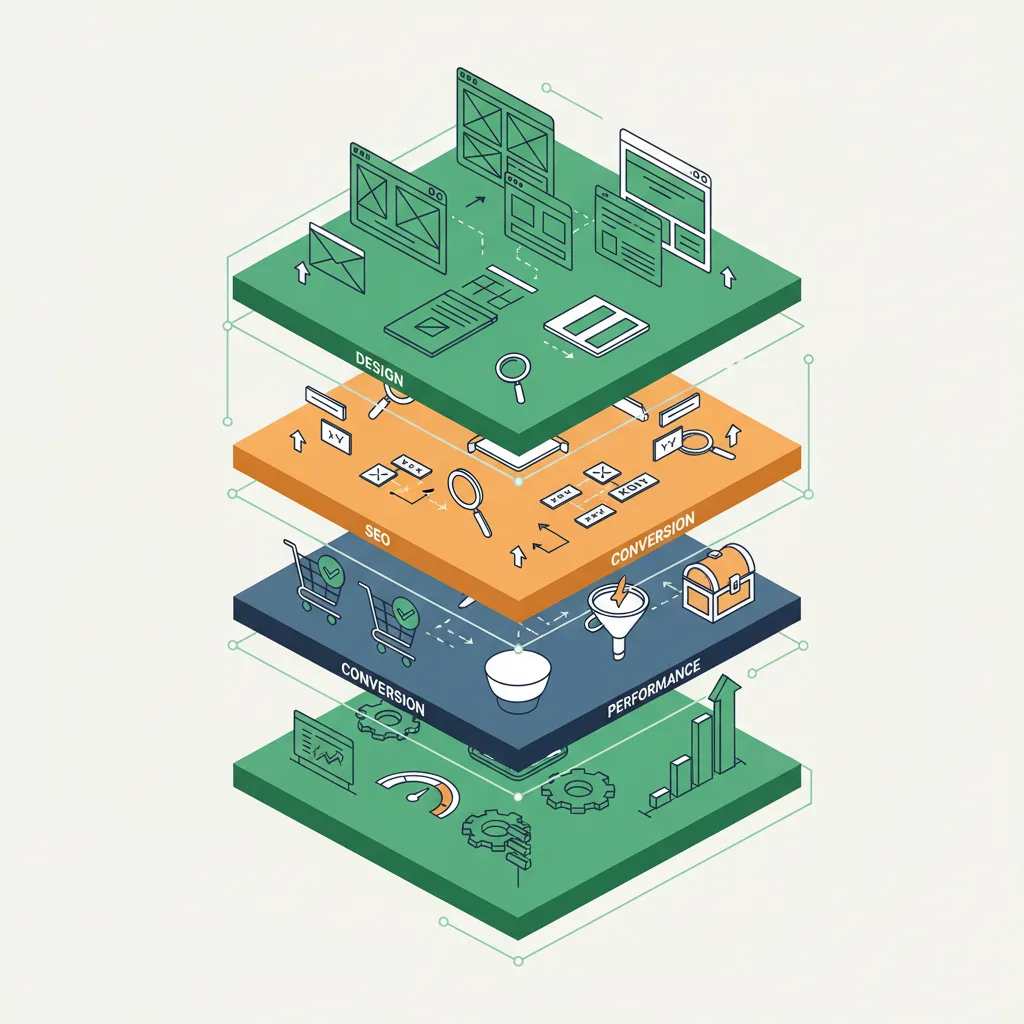
Don’t implement 3D if your traffic is low. If you get 500 visitors per month, spend money on marketing. Get traffic first. Invest in experience second.
Don’t implement 3D if your customer problem isn’t visual. A tax consultant doesn’t need 3D. A lawyer doesn’t. A financial advisor doesn’t. They need clear information, trust signals, and easy communication channels. 3D doesn’t help.
Don’t implement 3D if you can’t iterate quickly. If your product catalog changes monthly, managing 3D assets becomes painful. Stick with traditional design until you have product stability.
Don’t implement 3D if your customers use old devices. If your analytics show 40% of traffic on devices from 2016, mobile 3D performance will be poor. Wait until your traffic modernizes.
Don’t implement 3D if your competitors already have it. If 3D is table stakes in your industry, yours doesn’t differentiate you. Solve a different problem. If nobody in your industry has it, 3D is a differentiator worth the cost.
Don’t implement 3D without a clear business goal. If you can’t articulate how 3D moves your conversion metrics or changes customer perception, the investment is decoration. Skip it.
The deciding factor: can you articulate a specific customer problem 3D solves? If yes, the ROI often justifies the cost. If no, save your money.
The Math for Different Business Types
E-commerce: 3D on product pages shows 94% conversion lift. For every $100k monthly revenue, a 20% conservative increase is $20k. Payback on $50k investment is 2.5 months. Worth it.
Service providers (plumbing, electrical, cleaning): 3D rarely moves conversion significantly. Budget-conscious customers care about price and availability. Traditional design handles this. 3D is cost-ineffective here.
High-end services (luxury real estate, custom building): 3D tours sell properties 31% faster and at higher prices. Investment pays back on first deal often. Strongly worth it.
B2B SaaS: 3D data visualization or architecture demos can strengthen sales conversations. Not a direct conversion tool but a sales enablement tool. ROI is measurable but indirect. Consider for companies with $500k+ ACV.
Fitness and wellness: Before-and-after 3D body visualization or interactive facility tours increase engagement. ROI is moderate but consistent. Worth considering if you have sufficient margins.
Education and training: 3D simulations and interactive learning environments drive engagement. Long-term student success metrics improve. ROI is over years, not months. Worth it if you’re in this space.
The business model most suited to 3D ROI: B2C product sales with 30%+ margins. That’s where payback is fastest and most certain.
Visit our 3D-interactive design services page to explore how Cause & Effect helps small businesses invest smartly in 3D experiences. We do the math first, then the build.
FAQs
What’s the minimum budget for adding 3D to my website?
A basic 3D element like an interactive product viewer or 3D hero section starts at $5,000-$15,000 with a 4-8 week timeline. This is where most small businesses start—meaningful impact without requiring a full website rebuild.
How quickly will I see ROI from a 3D website investment?
For e-commerce businesses, a conservative 20% revenue increase on $100k monthly revenue means a $50,000 investment pays back in 2.5 months. For service businesses, ROI depends on how visual your offering is. Luxury real estate often sees payback on the first deal.
Should I build my entire website in 3D?
No. Phase your investment. Start with the page that matters most—your product page for e-commerce, your hero section for services, or your portfolio for creative businesses. Add more 3D as ROI justifies the expansion. Strategic placement beats blanket implementation.
What ongoing costs should I expect after launching a 3D website?
Budget 5-10% of initial build annually for maintenance, 20-40% higher hosting costs, and additional fees for new 3D model creation as you add products. Total hidden costs typically run 10-15% of the initial build. These are predictable and budgetable.
My business isn’t visual—should I still consider 3D?
Probably not. If your customers care more about price, availability, and trust signals (like reviews and certifications), traditional web design serves you better. 3D makes sense for visual or tactile products, complex configurations, and businesses where spatial understanding drives purchase decisions.