
How Long Does It Take to Build a 3D Interactive Website?
Timeline questions reveal a gap between what clients expect and what 3D actually requires. A basic 3D feature takes weeks. A full 3D website takes months. The d
Timeline questions reveal a gap between what clients expect and what 3D actually requires. A basic 3D feature takes weeks. A full 3D website takes months. The difference comes down to scope, asset complexity, and how much optimization your performance targets demand.
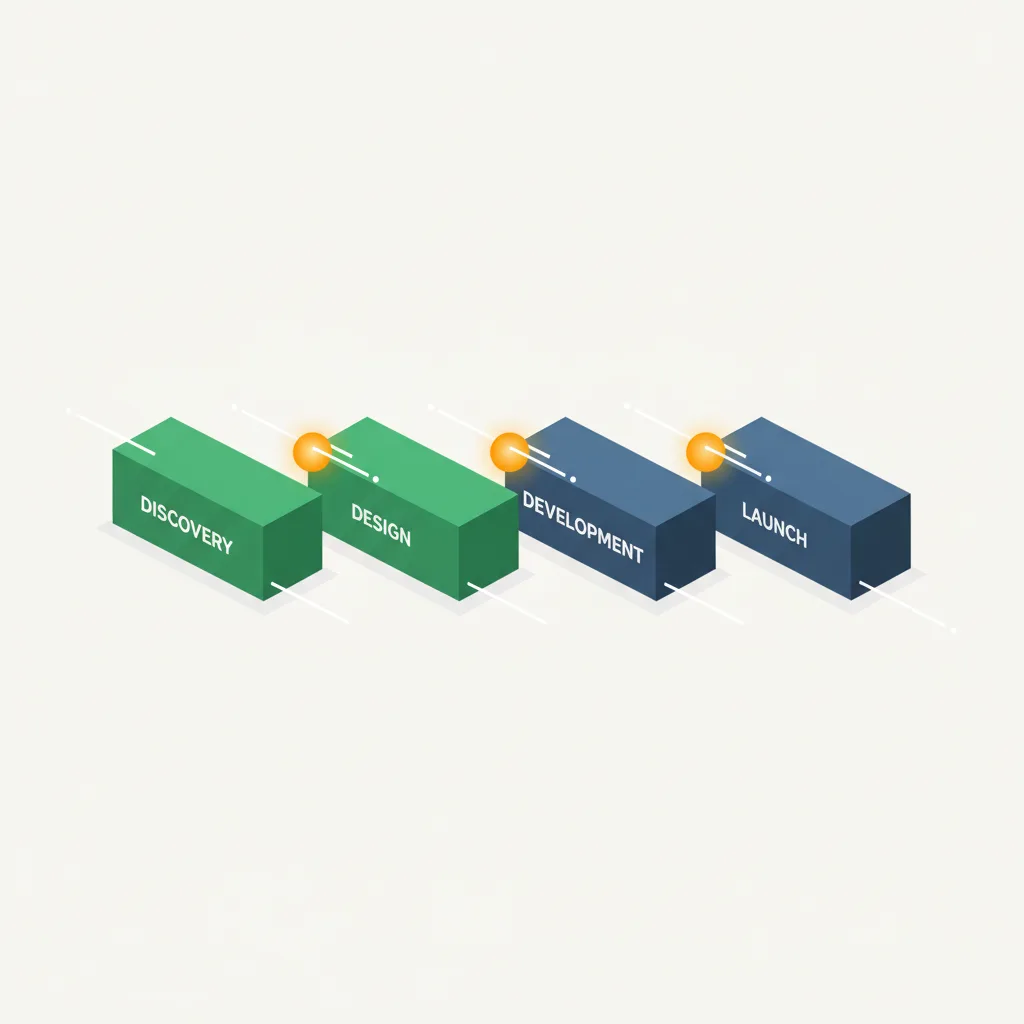
What Are the Typical Phases of 3D Website Development?
Answer Capsule: 3D projects follow distinct phases: discovery and planning, 3D asset creation, integration and development, optimization, and testing—each adding weeks to the timeline.
Discovery and planning happens first, typically one to two weeks. This is where you and your developer define project scope, identify which pages need 3D and why, agree on visual style, and establish performance targets. Rushing this phase creates confusion later and extends timelines. Good discovery produces clear specifications that development can follow without constant back-and-forth.
3D asset creation is the time-intensive phase. If you need custom 3D models, artists spend 2-8 weeks modeling, texturing, and optimizing assets depending on complexity. A simple geometric shape takes days. A detailed product with multiple materials and intricate geometry takes weeks. A photorealistic human character takes months. This phase happens in parallel with development but often gates launch timelines because models must exist before developers can integrate them.
Integration and development is where developers build the web interface, Three.js scenes, interaction controls, and backend connections. This typically takes 4-12 weeks depending on feature complexity. Simple 3D embeddings take 4 weeks. Complex interactive scenes with state management, real-time data, and advanced shaders take 12+ weeks.
Optimization focuses on performance. Developers compress assets, implement lazy-loading, adjust quality levels for different devices, and test Core Web Vitals. This phase overlaps with development but intensifies in the final weeks. Performance optimization can add 2-4 weeks to timeline if performance is problematic.
Testing happens throughout but concentrates at the end. QA teams test on multiple devices and browsers, verify interactions work as designed, and ensure fallback content displays correctly. This phase takes 1-3 weeks.
How Long Does a Basic 3D Website Enhancement Take?
Answer Capsule: A basic enhancement—adding one or two 3D elements to an existing website—takes 4-8 weeks from start to launch.
Basic enhancements use simplified assets and well-understood development patterns. You’re adding a spinning product model to a product page, or an interactive configurator to a homepage. Developers use established Three.js patterns and libraries rather than building custom systems. This focus reduces development time.
Asset creation for basic work is straightforward. A product model can be optimized from existing CAD files in 1-2 weeks. A simple environment might take 2-3 weeks. You’re not commissioning photorealistic art; you’re creating functional 3D representations that communicate the product effectively.
The four-week minimum assumes everything goes smoothly. You provide clear product photography or CAD files. Stakeholder feedback is quick. Testing reveals no major issues. When any of these doesn’t happen, timelines extend. The eight-week maximum assumes more iterations, additional features, or unforeseen technical challenges.
Basic enhancements are ideal for proof-of-concept. You validate that 3D improves your metrics, build internal confidence in the technology, and create a foundation for more ambitious projects.
What Factors Extend a 3D Website Project Timeline?
Answer Capsule: Complex asset requirements, custom feature development, performance optimization challenges, and design iteration cycles extend timelines significantly.
Custom 3D asset creation is the primary timeline extension. If your product requires photorealistic rendering and you don’t have existing 3D files, commissioning new assets adds 4-8 weeks. If you need variations (different colors, configurations, seasonal versions), each variation extends timeline. A shoe retailer needing 3D models in 20 colors and 30 styles faces massive asset creation work.
Advanced rendering features extend timelines. Basic 3D uses standard materials and lighting. Photorealistic rendering with physically-based materials, global illumination, and complex effects requires senior developer expertise and iterative refinement. This adds 4-8 weeks of specialist work.
Real-time data integration complicates development. A configurator that updates pricing as users adjust options, or that syncs with inventory systems, requires backend API development, state management, and thorough testing. This adds 4-8 weeks beyond pure 3D development.
Performance challenges delay launch. If optimization reveals that your 3D scene can’t meet Core Web Vitals targets on mobile, developers must redesign the approach. This might mean reducing model complexity, implementing level-of-detail systems, or restructuring how assets load. Problem-solving cycles here add 2-6 weeks.
Stakeholder feedback and design iteration extend timelines proportionally. If each iteration requires asset changes, code refactoring, and re-testing, you’re adding weeks per iteration. Clear initial specifications reduce iteration need.
Browser compatibility testing occasionally reveals unexpected issues. A feature works fine on desktop Chrome but has bugs on mobile Safari. Fixing cross-browser issues adds 1-3 weeks depending on issue severity.
How Does 3D Website Development Compare to Traditional Web Design Timelines?
Answer Capsule: 3D projects take 50-100% longer than traditional websites of equivalent complexity due to asset creation and optimization phases.
A traditional website redesign takes 8-16 weeks depending on scope. Phases are: discovery (1-2 weeks), design (2-4 weeks), development (3-6 weeks), content integration (1-2 weeks), testing (1-2 weeks), launch. The longest phases are design and development, but both follow established patterns with well-known tools and workflows.
3D projects follow similar phases but add significant time in asset creation. The 8-16 week traditional timeline becomes 12-24 weeks with 3D because asset creation is long and sequential. You can’t parallelize asset creation and development as efficiently as you can parallelize design and development—assets must exist before developers can integrate them.
However, this comparison assumes equivalent complexity. A traditional website might be more complex in information architecture, e-commerce logic, or content management systems. A 3D website might be visually simpler but technically deeper in rendering. The comparison is imperfect.
What matters for your planning: assume 3D adds 4-12 weeks to your timeline compared to traditional web development. If a traditional site takes 12 weeks, budget 16-24 weeks for the 3D equivalent.
How Can You Speed Up 3D Website Development Without Cutting Quality?
Answer Capsule: Smart project planning, using templates and libraries, and establishing clear specifications upfront all compress timelines without sacrificing quality.
Pre-source 3D assets aggressively. Instead of commissioning original models, license models from Sketchfab, TurboSquid, or similar marketplaces. Customizing an existing model takes 1-2 weeks; commissioning a new model takes 4-8 weeks. For most businesses, customization is sufficient.
Use 3D frameworks and templates. Three.js has countless examples, plugins, and starter templates for common features. A product configurator template can be customized in weeks instead of built from scratch in months. This trades some customization for speed.
Implement phased rollout. Build version one with essential features, launch, measure results, then build version two with advanced features. This approach gets you value sooner rather than waiting months for perfection. Initial launch might be 3D on your homepage and top product page; version two adds 3D to every product page.
Clarify specifications obsessively upfront. Ambiguity causes rework and extends timelines. If stakeholders can’t agree on how the 3D should look or function, development stalls. Invest time in discovery to align everyone before development starts.
Use no-code or low-code platforms where applicable. Shopify’s native 3D product features require no custom development. Sketchfab embeds require no coding. If these platforms meet your needs, use them instead of custom development. You lose some customization but gain speed.
Allocate realistic testing time. Don’t assume you can test 3D on five devices over a weekend. Budget 1-3 weeks for comprehensive testing across browsers and devices. Quality 3D requires rigorous testing; rushing testing creates launch-day disasters that extend timeline further.
Establish clear performance targets early. If you don’t know what Core Web Vitals scores you need until late in development, optimization becomes chaotic. Define targets upfront so developers optimize as they build rather than retroactively.
Planning a 3D website project?
Cause & Effect Strategic Partners’s 3D interactive design services include detailed project planning and realistic timeline estimates. We set expectations accurately from day one.
Get a Free Timeline Estimate →
Frequently Asked Questions About 3D Website Development Timelines
Can a 3D website be built in less than 4 weeks?
It’s possible using pre-built templates, existing 3D models, and no-code tools. However, custom implementations rarely finish in under 4 weeks because asset creation, optimization, and testing each require meaningful time.
What’s the biggest timeline risk in 3D projects?
Custom 3D asset creation is the primary risk. If models need to be built from scratch without reference files, the modeling phase alone can take 4-8 weeks. Having existing CAD files or 3D models to start from dramatically reduces this risk.
Should I launch with basic 3D and add features later?
Yes. Phased rollout is the recommended approach. Launch with 3D on your highest-impact pages, measure results, then expand. This gets you value faster and lets you make data-driven decisions about additional investment.
How much time should I budget for testing?
Budget 1-3 weeks for comprehensive testing across devices and browsers. 3D websites require testing on actual hardware—not just simulators—to verify performance and touch interactions work correctly.
Does using Three.js speed up development compared to raw WebGL?
Significantly. What might take weeks in raw WebGL takes days in Three.js. The library handles complex rendering math, provides built-in controls, and has extensive documentation. This is why Three.js dominates the industry.