

Local Citation Building for Atlanta Service Businesses
Service businesses in Atlanta compete fiercely for local attention. Your website might rank well, but search engines need to trust what you claim about your bus
Service businesses in Atlanta compete fiercely for local attention. Your website might rank well, but search engines need to trust what you claim about your business. Local citations—mentions of your business name, address, and phone number across the web—tell Google you’re legitimate and established. Without them, potential customers may never find you. This guide shows you exactly how citations work and why they matter for your bottom line.
What are local citations and why do search engines care?
Answer Capsule: Google trusts businesses mentioned consistently across multiple trustworthy websites. These mentions are citations, and they’re one of the strongest local SEO signals. Without citations, you’re invisible to the algorithm.
Citations are online references to your business information. When Google sees your business mentioned on directories, review sites, and industry platforms, it interprets those mentions as votes of confidence. The more places your business appears with accurate details, the more credible you seem. According to Bright Local’s research on local search behavior, 86% of consumers use Google to find local business information. Citations help you show up in those searches. The key is consistency. If your business name, address, or phone number differs across directories, Google gets confused about which information is correct. This inconsistency actually hurts your rankings.
How do citations differ from backlinks and reviews?
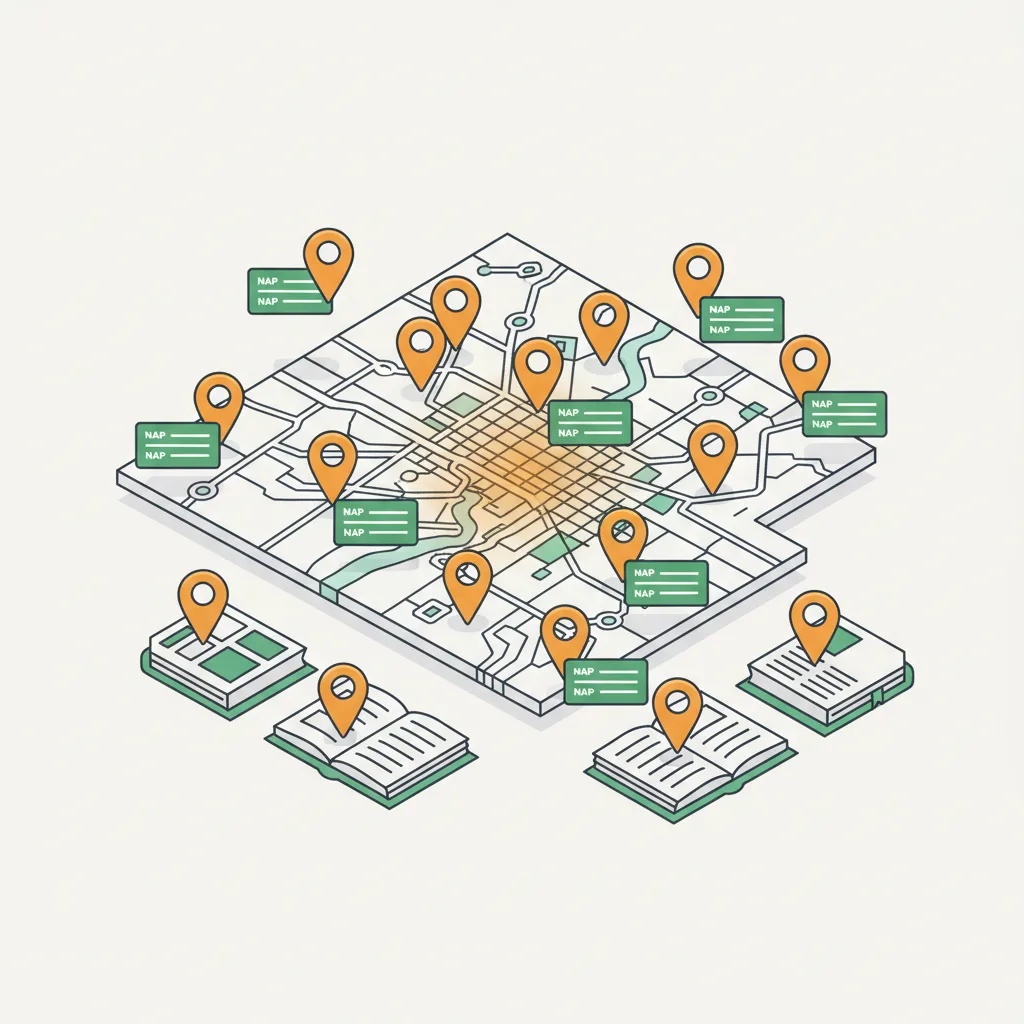
Answer Capsule: Citations are address mentions; backlinks are clickable references; reviews are customer opinions. All three matter for local SEO, but citations directly validate your business existence.
Backlinks point to your website from other domains. Reviews are customer assessments on platforms like Google or Yelp. Citations are purely informational—your business details listed on directories without necessarily linking to your site or requiring customer feedback. Think of it this way: a citation confirms you exist; a review confirms you’re worth hiring; a backlink shows your content has authority. Many Atlanta service businesses overlook citations because they’re not glamorous, but they’re foundational.
For local search rankings, citations matter tremendously. Research from Moz’s local search ranking factors study shows that consistent business information across the web is the second-most important ranking factor after Google Business Profile optimization. Citations fill gaps that your own website can’t.
Which citation directories should Atlanta businesses prioritize?
Answer Capsule: Start with Google Business Profile, then claim listings on industry-specific directories. Focus on high-authority sites relevant to your service type before spreading thin across lesser-known platforms.
Your priority list depends on your industry, but some directories matter for almost every Atlanta service business. Google Business Profile is non-negotiable—it’s the foundation of local search. After that, target industry-specific directories. A plumber should focus on Home Advisor and Angi. A marketing consultant should claim HubSpot’s partner directory. A law firm should verify their state bar listing.
General business directories like Yelp, Apple Maps, and Yellow Pages matter too. Rather than creating accounts on dozens of marginal sites, focus your energy on directories where your target customers actually search. According to Bright Local’s citation research, quality matters far more than quantity. One well-maintained citation on a high-authority site beats ten on obscure platforms.
Why do citation inconsistencies hurt your local rankings?
Answer Capsule: Conflicting business information confuses search engines about which details are correct. This confusion directly damages your ability to rank for local searches in Atlanta.
Imagine your business is listed as “Atlanta Marketing Pro” on Google My Business, but “Atlanta Marketing Professionals LLC” on Yelp, and “Atlanta Marketing Pro Solutions” on a directory. Google’s algorithm struggles to connect these as the same business. It may treat them as separate entities, splitting your citation authority across multiple profiles.
Inconsistencies also create trust issues. When a potential customer finds conflicting information online—different phone numbers, addresses, or business names—they question your legitimacy. A Business Wire survey on data quality impacts found that 60% of consumers won’t hire a business if their information seems wrong or outdated. For Atlanta service businesses, this lost trust directly translates to lost revenue.
How do you find and audit your existing citations?

Answer Capsule: Use citation tracking tools to locate every mention of your business online. Then check each listing for accuracy and claim those you don’t yet control.
Start by searching your business name in Google along with “Atlanta” and your city. Look for existing profiles on major directories and note which ones are accurate and which contain errors. Free tools like Google Business Profile give you insights into where your business appears online. For deeper research, services like Semrush Local and Moz Local show you every citation discovered across the web.
The audit process matters. Open a spreadsheet and list each directory where your business appears. Record the business name, address, phone number, and any other details listed. Compare these against your official information. Look for typos, old phone numbers, or previous addresses. Flag inconsistencies for correction. This systematic approach prevents you from wasting time on irrelevant platforms while ensuring that your most important citations are accurate and current.
What’s the best strategy for building new citations strategically?
Answer Capsule: Build citations on directories where your ideal customer looks for services. Prioritize authority and relevance over volume, then maintain consistent information everywhere.
Your strategy depends on your service type. An Atlanta HVAC company should dominate directories where homeowners search for contractors. A B2B service firm should claim listings on industry-specific platforms. The goal isn’t to appear everywhere, but to appear consistently in the right places.
Start with the high-impact directories: Google Business Profile, Yelp, Apple Maps, and your industry’s specific platforms. Ensure your website itself contains your business name, address, and phone number in the same format everywhere—including your footer, contact page, and schema markup. This consistency extends to citation sites. When you create new listings, use identical formatting each time.
How do citations connect to your overall local SEO strategy?
Answer Capsule: Citations are one piece of a three-part local SEO foundation: your Google Business Profile, citation consistency, and quality backlinks from local sources.
Citations don’t stand alone. They work alongside your Google Business Profile optimization, review generation, and website SEO. If your Google Business Profile is incomplete or poorly optimized, citations can’t carry you to top rankings. Similarly, if your website doesn’t target local keywords or provide genuine value, citations won’t drive meaningful traffic.
The synergy matters. When your citations, Google Business Profile, and website all present consistent information with a unified message, search engines view you as a legitimate, established business. Many Atlanta service businesses work with agencies like Cause & Effect Strategic Partners’s SEO services to ensure all these elements align. The investment in citation building pays dividends when paired with other local SEO tactics that target customers actively searching for your services.
Frequently Asked Questions
Do I need citations if I have a strong Google Business Profile?
Google Business Profile is critical, but citations amplify its power. Citations provide independent verification of your business information, which boosts your profile’s credibility in Google’s algorithm. Together, they create a stronger local SEO foundation than either alone.
How often should I update my citations?
Update citations whenever your business information changes—a new address, phone number, or service area. Beyond that, audit your citations annually to catch errors or out-of-date details. Regular maintenance prevents inconsistencies from damaging your rankings.
Can I hire someone to build citations for me?
Yes, but be cautious. Poor quality citation building can hurt you if the service creates listings with inconsistent or incorrect information. Work with providers who verify accuracy and focus on authority directories rather than quantity.
Do local citations help if I serve multiple cities?
Citations help, but the impact varies by location. If you serve multiple Atlanta neighborhoods, citations emphasizing your city matter most. If you serve metro Atlanta and surrounding areas, citations that reflect your actual service areas are most valuable.
How long until citations improve my local rankings?
Citations take time to show impact—typically 4-12 weeks as Google crawls and verifies the information. Don’t expect overnight results. However, once in place, consistent citations provide ongoing ranking benefits. Think of them as a long-term investment rather than a quick fix.
Building citations is unglamorous work, but it’s foundational. Every service business in Atlanta depends on local search visibility, and every local search ranking depends partly on citation authority. The businesses that win locally are those that handle these details correctly—not the ones that chase shortcuts or ignore consistency. Your competitors might overlook citations entirely, which means your attention to this area becomes a competitive advantage. Start auditing your existing citations today, and you’ll notice search engine behavior shifting in your favor within weeks.