
SEO vs PPC: Which Strategy Wins for Small Business in Atlanta
Most small business owners in Atlanta face the same choice: spend money on SEO or PPC ads. Both claim to drive traffic. Both promise growth. But they work in fu
Most small business owners in Atlanta face the same choice: spend money on SEO or PPC ads. Both claim to drive traffic. Both promise growth. But they work in fundamentally different ways, and the right pick depends entirely on your business model, budget, and timeline.
What’s the Real Difference Between SEO and PPC?
Answer Capsule: SEO earns free clicks over time through ranking improvements. PPC buys immediate clicks through Google Ads. SEO costs less per click but requires patience. PPC costs more but drives traffic today.
SEO (search engine optimization) involves optimizing your website, creating relevant content, and building authority so Google ranks you higher for keywords your customers search. According to Backlinko’s 2024 SEO study, the average click-through rate for organic search results is 34.7% for the first position. This means if you rank first for a keyword people actually search, you’re getting free clicks every single day.
PPC (pay-per-click) lets you bid on keywords and display ads at the top of search results. You pay only when someone clicks your ad. Google Ads data shows small businesses pay between $1 and $50 per click depending on industry and competition. For Atlanta-based businesses, local commercial keywords average $8-15 per click.
Which One Actually Costs Less?

Answer Capsule: SEO costs less per click but requires months of work before traffic appears. PPC costs more upfront but shows ROI immediately if your conversion rate is strong.
Let’s break this down with real numbers. If you invest $2,000 per month in SEO services (writing, optimization, link building), you might see your first meaningful traffic bump after 4-6 months. That’s $8,000-$12,000 before you get results. But once you rank, that traffic keeps coming with only maintenance costs.
PPC is different. Spend $2,000 per month on Google Ads, and you’ll drive traffic immediately. At an average cost of $12 per click for a local Atlanta service business, you get roughly 166 clicks. If your conversion rate is 2%, that’s about 3 leads. If those convert to customers at 30%, you’ve gained one customer. Whether that’s worth $2,000 depends on your profit margin.
HubSpot’s analysis of PPC ROI shows that businesses typically see $2-$3 in revenue for every $1 spent on Google Ads, but this varies wildly by industry. Service-based businesses (plumbing, HVAC, consulting) often see better ROI than e-commerce on paid search.
Does SEO Actually Work for Atlanta Small Businesses?
Answer Capsule: SEO works if your industry has search demand and you can beat competitors. It takes 3-9 months to see results but creates lasting traffic that doesn’t stop when you stop paying.
Yes, but with conditions. Moz’s local SEO study found that 70% of local search traffic converts at a higher rate than national search traffic. This is good news for Atlanta small businesses because people searching “digital marketing agency near me” or “best plumber in Atlanta” are already local and ready to buy.
The challenge is competition. If you’re selling something popular in Atlanta, established competitors already own the top positions. Beating them requires either finding less competitive keywords (the long tail) or investing in content that serves a specific angle your competitors miss. This is where strategy matters.
Our SEO services focus on finding these openings—keywords your competitors aren’t targeting, content gaps in your industry, and opportunities to build authority faster.
When Should You Choose PPC Over SEO?
Answer Capsule: Choose PPC if you need results in days, not months. Use it to test keywords before investing in SEO or to fill traffic gaps while organic rankings grow.
Scenario one: You’re launching a new service in Atlanta and need leads immediately. PPC gets you in front of customers within 24 hours. SEO won’t help for months.
Scenario two: You sell high-ticket services (consulting, coaching, accounting). One customer might be worth $10,000+. Even at $20 per click, if you close 1 out of 20 clicks, your cost per customer acquisition is $400—still profitable.
Scenario three: You want to test whether a specific keyword actually converts. Run a small PPC campaign for one month. If people click but don’t buy, you know SEO on that keyword isn’t worth the investment. Google Ads conversion tracking gives you clear data in days instead of months.
Scenario four: Your industry is highly competitive locally. If 10 established agencies already rank for “web design Atlanta,” climbing above them takes time. PPC lets you capture those searches while you build SEO authority.
Our paid ads management service focuses on this tactical approach—using PPC to fill immediate needs while longer-term SEO work compounds in the background.
Can You Run Both Strategies at the Same Time?
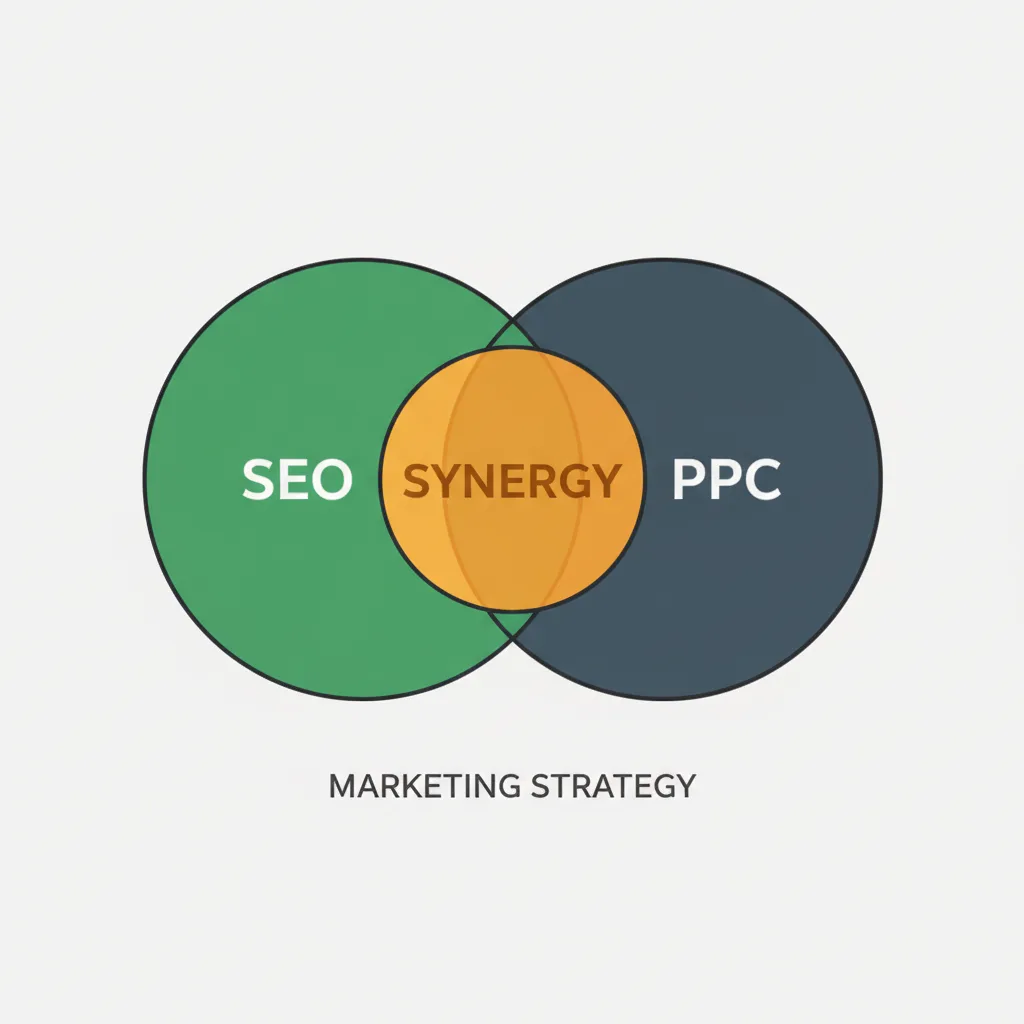
Answer Capsule: Running both simultaneously is smart strategy, not waste. PPC funds immediate growth while SEO compounds over time. They reinforce each other and reduce risk.
Here’s why this matters: Customer journey isn’t linear. Someone might click your PPC ad today, leave, then search again next week and click your organic result. They’re more likely to trust you on the second interaction. This is called the compound effect in marketing—multiple touches increase conversion probability.
Google’s own research shows that the combination of organic and paid search performs better than either channel alone. Businesses using both channels see 20% higher conversion rates than those using just one.
Budget-wise, think of it as portfolio management. Allocate 60-70% to SEO (longer ROI horizon, lower cost per click) and 30-40% to PPC (faster results, higher cost). As your organic rankings improve and traffic increases, you can gradually shift more budget back to the growing organic channel.
Which Strategy Actually Wins?
Answer Capsule: SEO wins long-term for sustainable, cheap traffic. PPC wins short-term for immediate results and testing. The real winner is combining them strategically.
For an Atlanta small business with limited budget and 6+ months to wait: SEO wins. You’ll spend less per click and build an asset that appreciates over time. Your website becomes a revenue machine.
For a small business that needs leads this quarter or wants to validate an idea: PPC wins. You’ll spend more but get concrete results fast enough to make smart decisions.
For most healthy small businesses that can invest in both: the hybrid approach wins. You get immediate cash flow from PPC while building sustainable traffic through SEO. As organic rankings climb and costs drop, you can reduce PPC spending and improve overall profitability.
The real differentiator isn’t the channel—it’s execution. A poorly run SEO campaign loses to a well-managed PPC strategy every time. A smart PPC budget allocated toward keywords you’re already ranking for (PPC + organic combo) often outperforms either alone.
Frequently Asked Questions
How long before SEO shows results for my Atlanta business?
Most websites see meaningful traffic within 3-6 months if they’re optimizing competitive keywords, but longer if targeting highly competitive terms. Local SEO (Google Business Profile, local citations) can show results faster—sometimes 4-8 weeks. Progress also depends on your current ranking position and how much content you publish.
What’s a reasonable PPC budget for a small Atlanta business?
Start small: $500-$1,000 per month to test keywords and understand your conversion rates. Once you know which keywords convert, scale to $2,000-$5,000 monthly. This gives you enough volume to collect meaningful data without overcommitting if your industry turns out to be expensive.
Can I do SEO myself or should I hire an agency?
You can learn SEO basics (keyword research, on-page optimization, content writing), but ranking competitively usually requires expertise in technical SEO, link building, and competitive strategy. Most Atlanta small businesses save money hiring an agency for strategy and execution rather than attempting DIY SEO while managing their core business.
Does Google penalize businesses that use both SEO and PPC?
No. Google separates paid and organic ranking systems completely. Using PPC doesn’t help or hurt your organic rankings. Google actually makes more money when you use both channels, so they’re not incentivized to penalize this approach.
Which brings better-quality leads: SEO or PPC?
Both bring quality leads if your keywords are right. The difference is in conversion timing. PPC converts faster because someone paid to reach you today (they’re highly intent). SEO converts slower but often at higher rates because people found you naturally and over time built trust. The quality difference is minimal—intent is what matters.
Small business growth rarely comes from picking one perfect channel. It comes from understanding what you need right now, testing efficiently, and building systems that compound over time. For most Atlanta businesses, that means starting with PPC to validate demand and gather data, then layering in SEO to reduce costs and build long-term authority.
The choice between SEO and PPC isn’t really a choice at all—it’s a sequencing question. Both matter. The winner is the business that uses them strategically instead of treating them as either/or bets.